MENU
- Times & Locations
- The Leadership
- What We Believe
- Foundation Documents
- The Gospel
- Our Association
- Our Music
- Upcoming Events
- Contact
About
- Bible Reading Plan
- Baptist Catechism
- Catechism For Girls And Boys
- Confession of Faith
- Recommended Resources

Emmaus is a Reformed Baptist church in Hemet, California. We are a community of Christ followers who love God, love one another, and serve the church, community, and nations, for the glory of God and for our joy.
Our hope is that you will make Emmaus your home and that you will begin to grow with us as we study the scriptures and, through the empowering of the Holy Spirit, live in a way that honors our great King.
LORD'S DAY WORSHIP (SUNDAYS)
10:00am Corporate Worship
In the Emmaus Chapel at Cornerstone
26089 Girard St.
Hemet, CA 92544
EMMAUS ESSENTIALS
Sunday School For Adults
9:00am to 9:45am most Sundays (Schedule)
In the Chapel
MAILING ADDRESS
43430 E. Florida Ave. #F329
Hemet, CA 92544
The Realm is our church's online network. We use this tool as our primary means of communication. Be sure to check it often and don't hesitate to contact us if you have any questions.
Interested in becoming a member? Please join us for a four-week study in which we will make a case from the scriptures for local church membership and introduce the ministries, government, doctrines, and distinctive's of Emmaus Reformed Baptist Church.
Gospel Community Groups are small group Bible studies. They are designed to provide an opportunity for the members of Emmaus to build deeper relationships with one another. Groups meet throughout the week to discuss the sermons from the previous Sunday, to share life, and to pray.
An audio teaching series through the Baptist Catechism aimed to instruct in foundational Christian doctrine and to encourage obedience within God’s people.
Emmaus Essentials classes are currently offered online Sundays at 9AM. It is through our Emmaus Essentials (Sunday School) that we hope to experience an in depth study of the scriptures and Christian theology. These classes focus on the study of systematic theology, biblical theology, church history, and other topics practical to Christian living.
A podcast produced for International Reformed Baptist Seminary: a forum for discussion of important scriptural and theological subjects by faculty, administrators, and friends of IRBS.
A 24 lesson Bible study in which we consider “what man ought to believe concerning God, and what duty God requireth of man” (Baptist Catechism #6).
Search:
At Emmaus we believe that God has given parents, especially fathers the authority and responsibility to train and instruct children up in the Lord. In addition, we believe that God has ordained the gathering of all generations, young to old, to worship Him together in one place and at one time. Therefore, each and every Sunday our children worship the Lord alongside their parents and other members of God’s family.
Jan 12
16
Doctrinal Standards WSC #13
Memory Verses
Study Passage: Genesis 3
Support Passages: Genesis 6:5-8; Psalm 89:46-48; Ecclesiastes 7:20-29; John 6:43-44; Romans 1:24-25; I Corinthians 15:21-22; Ephesians 2:1-3; James 1:13-15; Revelation 21:4
Bible Story: Genesis 3
Thoughts
Discussion Questions
Jan 12
16
OIA questions based on sermon given 01-14-12
The sermon this week focused on Genesis 1. Genesis means “origins” and explains the beginning of mankind’s existence. The following is a series of observation and application questions bases on Genesis 1.
Observation
1. Who is the intended audience in this passage?
2. Are there any cultural or background issues that are important in understanding this passage?
3. When was this scripture written?
4. What key word(s)/phrase(s) really stand(s) out to you in this passage of scripture? Why are/is they/it important?
5. If you had to sum up all five of theses passages of scripture in one sentence, what would it be?
Application
After hearing the sermon on Genesis 1, do you view this portion of scripture different in any way? How? Why?
As made clear in the sermon, Genesis is not a scientific piece of literature. However, that does not mean that Genesis does not help in a scientific understanding of creation. How is Genesis useful in support of science and how is it not? Explain.
How does current scientific research support Genesis? How does it not? Do some research. Share your findings with your group. (Hint: look at recent findings in astronomy and planetary science)
Why is the information found in Genesis 1 absolutely essential in properly understanding salvation?
What other questions has this weeks sermon brought up for you? Share with your group.
Jan 12
11
This week we are going to extend on what we briefly discussed last week. Question 12 of the Westminster Shorter Catechism tells us that after God created Adam and Eve He entered into a covenant relationship with them. Through the history of mankind the Bible records various covenants God has entered into with individuals and large groups of people. All the covenants found in scripture can be categorized as either a covenant of grace or a covenant of works. God has revealed His redemptive story of mankind through these covenants. Those who are relying upon their works to achieve righteousness and acceptance before God are in a covenant of works. Those who rely on the death and resurrection of Jesus Christ for their righteousness and acceptance before God are in a covenant of grace. On Thursday we will briefly discuss why the Adamic and Noahic Covenants are primarily categorized as covenants of works and why the Noahic, Mosaic, Davidic, and New Covenants are primarily categorized as covenants of grace. We will also examine our responsibilities as believers in the covenant of grace
Jan 12
11
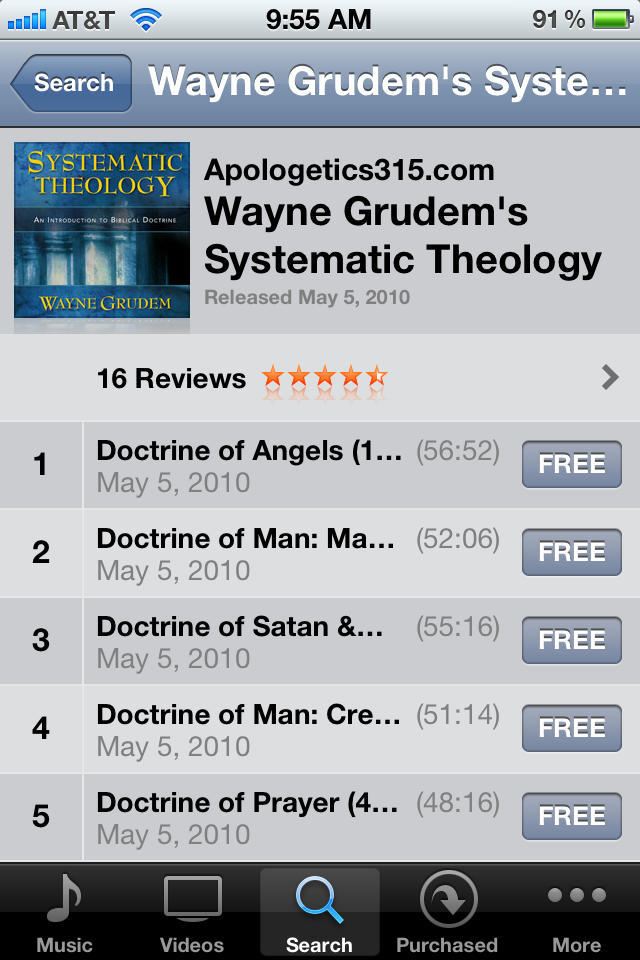
Here are instructions on how to add podcasts to your Apple or Android smartphone directly. However, if you are using an Apple iOS device (iPhone, iPod Touch, iPod Nano, etc.), I recommend that you download the podcasts from iTunes on your computer and then sync it to your device.
1. Open up the pre-installed iTunes app.

2. Click the magnifying glass icon on the bottom and search for “Wayne Grudem’s Systematic Theology”
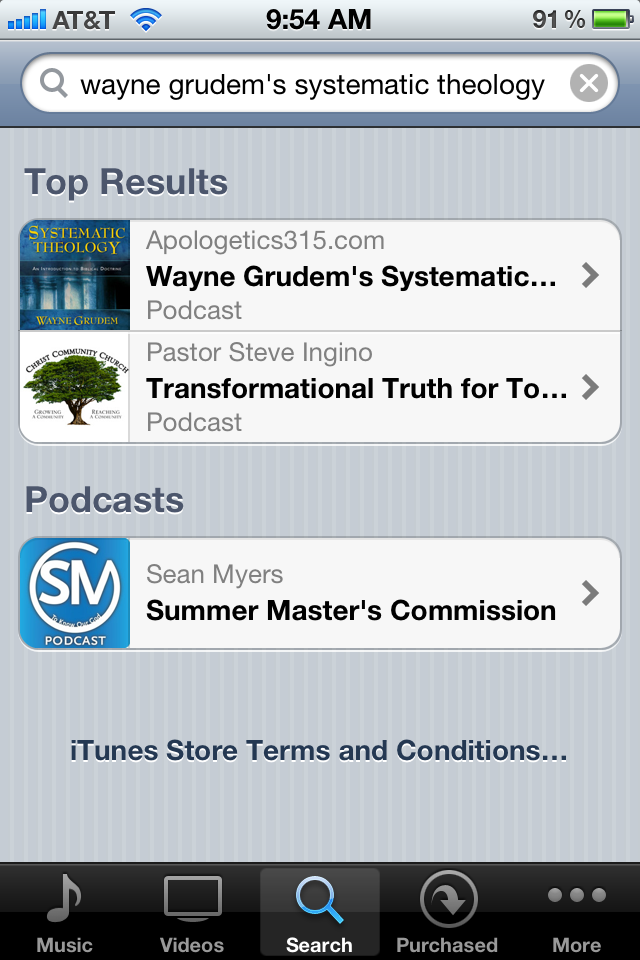
3. Download desired episodes!
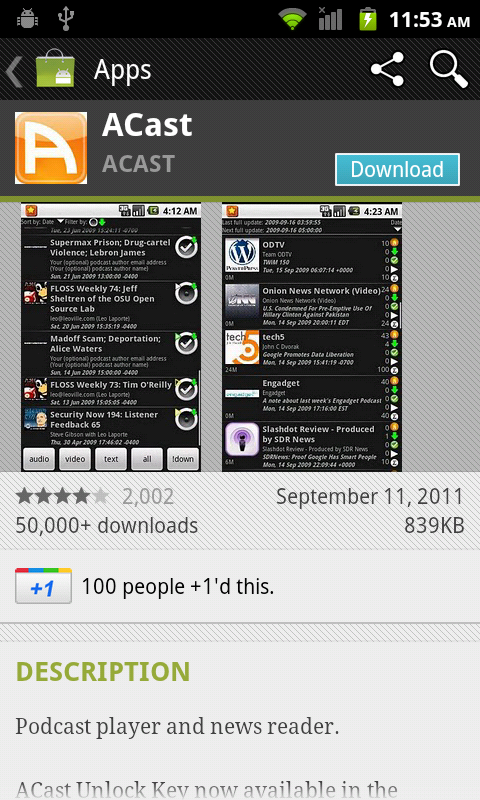
There are multiple apps that you can use to download podcasts, but I will demo one that I found works best to me. It is a free app called “ACast”. There is also a paid version to remove the ads called “ACast2”.
1. Download ACast from the Android Market
2. Open ACast and select “Accept” and “Ok” until you get to the home screen you see below:
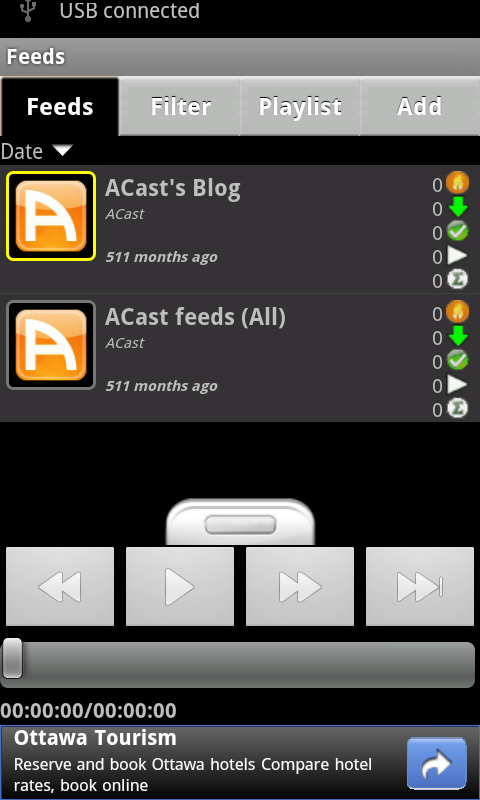
3. Select the “Add” button on the top right.

4. type “http://feeds.feedburner.com/WayneGrudemsSystematicTheology” and select the “+” sign button in the center underneath the text field.
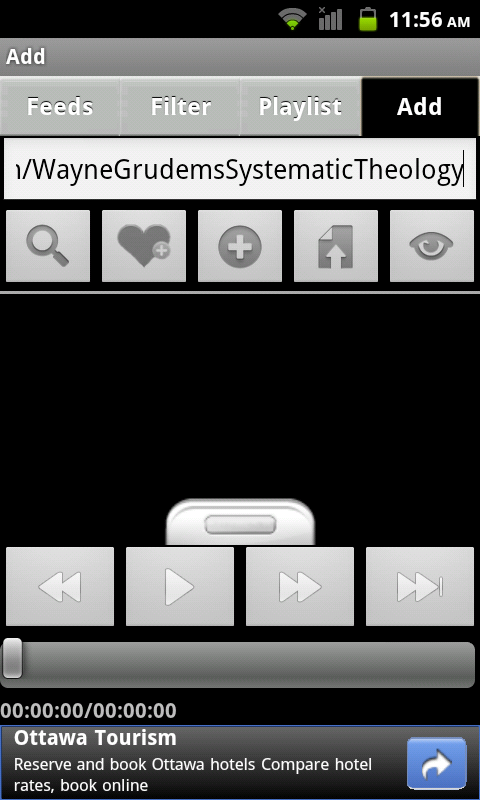
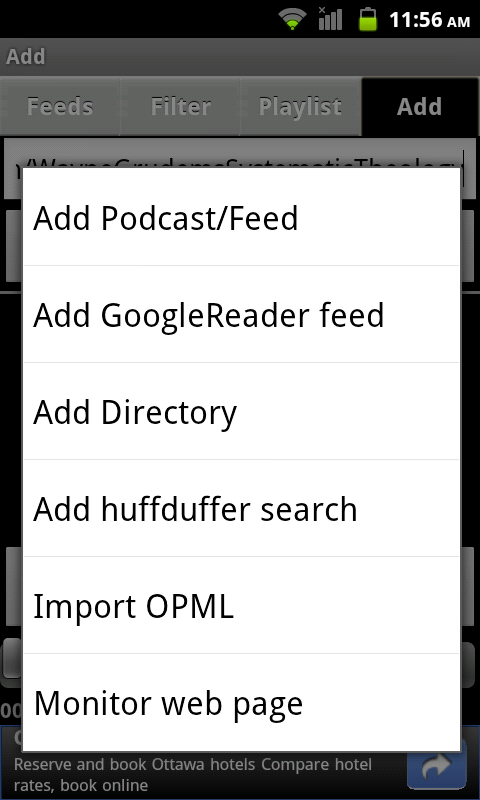
5. Select “Add Podcast/Feed”
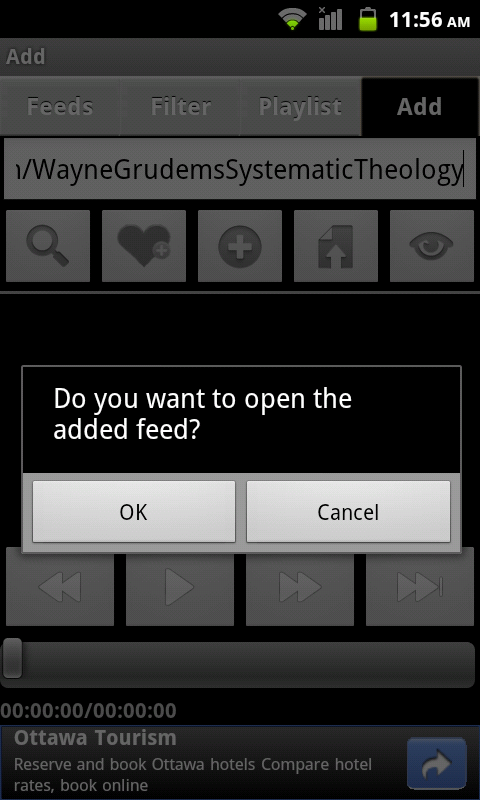
6. Select “Ok”
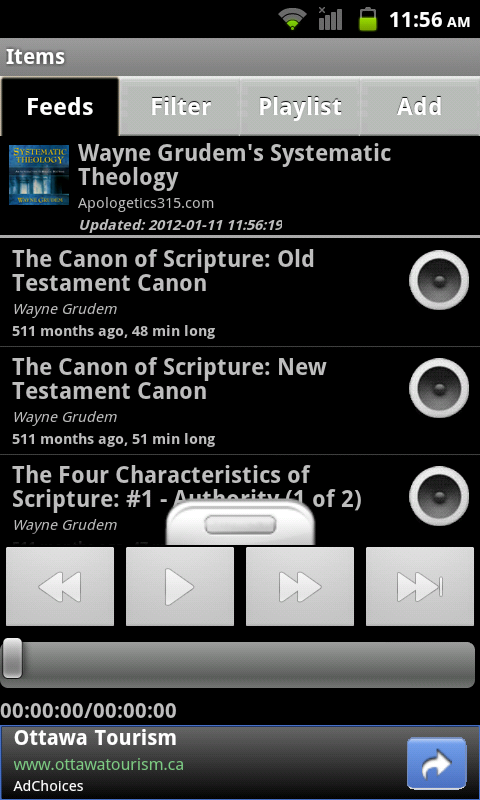
7. Listen to and/or download the desired episodes!
Jan 12
10
The sermon this week focused on the great commission. Often, when people think about the great commission Matthew 28:18-20 comes to mind. However, all four gospels and the book of acts include their own version of the great commission. The following is a series of observation and application questions based on the texts used for this week’s sermon; Matt 28:18-20, Mark 16:15-16, Luke 24:44-49, John 20:19-23, and Acts 1:4-8.
Observation
1. Who is the intended audience in this passage?
2. Are there any cultural or background issues that are important in understanding this passage?
3. When was this scripture written?
4. What key word(s)/phrase(s) really stand(s) out to you in this passage of scripture? Why are/is they/it important?
5. If you had to sum up all five of theses passages of scripture in one sentence, what would it be?
Application
1. What similarities do all 5 of these passages share with each other? Differences? Why do you think?
2. As Christ and scripture make abundantly clear (along with Joe’s message 🙂 ) the great commission is to be the core mission of the Christian faith. Being a Christian, how are you carrying out this mission in your life? Are there any priorities that need to be shifted? What? Why? Share with your group.
3. How has today’s church succeeded and failed in carrying out the great commission? What needs to be done and prioritized at Emmaus to ensure that the great commission is central to our ministry? Why? Explain.
4. Give practical and applicable ways in which a Christian who lives and works in the Hemet and San Jacinto Valley can daily carry out the Great Commission, as it is understood in all 5 of the listed passages.
5. Spend time in prayer that all Churches (including Emmaus) will accurately understand and fulfill the great commission throughout the world.
Jan 12
9
Doctrinal Standards WSC #12
Memory Verses
“But the Lord is faithful. He will establish you and guard you against the evil one” (2 Thessalonians 3:3, ESV).
Study Passage: Genesis 1:26-2:25
Support Passages: Exodus 20:8-9, 31:12-17; II Thessalonians 3:6-15; Hebrews 13:1-6
Bible Story: Exodus 24
Thoughts
Discussion Questions
Jan 12
5
Sorry for the late posting but tonight we will be examining the Westminster Catechism questions #11-15. I’m looking forward discussing these great scriptural truths with out middle and high school students.
Q. 11. What is God’s providence?
A. God’s providence is His completely holy, wise, and powerful preserving and governing every
creature and every action. (Ps 145:17; Ps 104:24; Isa 28:29; Heb 1:3; Ps 103:19; Mt 10:29,30,31)
Q. 12. What did God’s providence specifically do for man whom He created?
A. After the creation God made a covenant with man to give him life, if he perfectly obeyed; God told him not to eat from the tree of knowledge of good and evil or he would die.
(Gal 3:12; Ge 2:17)
Q. 13. Did our first parents remain as they were created?
A. Left to the freedom of their own wills, our first parents sinned against God and fell from their
original condition. (Ge 3:6,7,8,13; Ecc 7:29)
Q. 14. What is sin?
A. Sin is disobeying or not conforming to God’s law in any way. (1 Jn 3:4)
Q. 15. By what sin did our first parents fall from their original condition?
A. Our first parents’ sin was eating the forbidden fruit.
(Ge 3:6,12)
Jan 12
4
Thoughts for Observation, Interpretation, and Application on Sermon given 01/01/12
This week all of the questions are application questions, as several passages of scripture were used in the sermon. Be sure to refer to your notes from the sermon in answering these questions with your group. Joe addressed three areas: past, present, and future; the application questions will address each of these.
Application:
1. The sermon’s first point was on thanksgiving. God has done a lot in the life of Emmaus these past 7 months. In the midst of life it is easy to forget how many blessings God has given us as a community and individuals. Take some time and give thanks for all that God has done for Emmaus. Take some time and share with one another the things in which you are truly thankful for in your own life. (Psalm 9:1-2)
2.The sermon addressed our identity as a “new calvinism church”. As you know, the only reason Emmaus takes on such an identity is that Emmaus is fully convinced that scriptures teach the doctrine of election and ECF desires to be true and faithful to the scriptures. Share with your group your thoughts on being a church that stands for the accuracy, holiness, and authority of the scriptures, even in the midst of opposition. Also, discuss your thoughts on the new calvinism video that was shown during the sermon. (Phil 1:12-14; Romans 8:28)
3. The new sermon series is titled “On Mission Together; Understanding Our Mission In Light Of The Mission Of God”. What are your thoughts on this new series we are embarking on as a church? How can you as an individual use your gifts to become more effective with the Mission Of God? Spend some time in prayer in your group for the future of Emmaus Christian Fellowship. Pray that God will use Emmaus to bring about his glory and our joy.
"Him we proclaim,
warning everyone and teaching everyone with all wisdom,
that we may present everyone mature in Christ."
(Colossians 1:28, ESV)